Sublets in City Centre, Tel Aviv
A sublet in Lev HaIr, Tel Aviv's City Centre, mostly means an apartment in a 1930s or 1940s building somewhere between Rothschild Boulevard, Allenby, King George and Begin Road. The Red Line stops twice on the neighbourhood's edges, at Allenby and Carlebach, and most errands are a walk away. The downsides: most buildings went up without a shelter, so a safe room (mamad) in the apartment isn't a given, street parking costs money without a resident permit, and the light rail doesn't run on Shabbat.
What counts as Lev HaIr? Depends who you ask
Hebrew Wikipedia calls the neighbourhood Lev Tel Aviv and gives it clear borders: King George to the north-west, Ben Zion and Marmorek to the north, Begin Road and Carlebach to the east, Allenby to the south-west and the southern stretch of Rothschild to the south. Rothschild Boulevard itself, about a kilometre and a half from the edge of Neve Tzedek to the Habima compound, is the neighbourhood's backbone.
The municipality draws the line wider. In its TA/4320 renewal plan, the “Lev HaIr area” is quarters 5 and 6: from Bograshov in the north to Yitzhak Elhanan Boulevard in the south, and from HaYarkon in the west to Menachem Begin Road. The same name can cover an apartment on HaYarkon or a building on Begin Road, so get the street and number from the host.
1930s buildings: what that means for the apartment
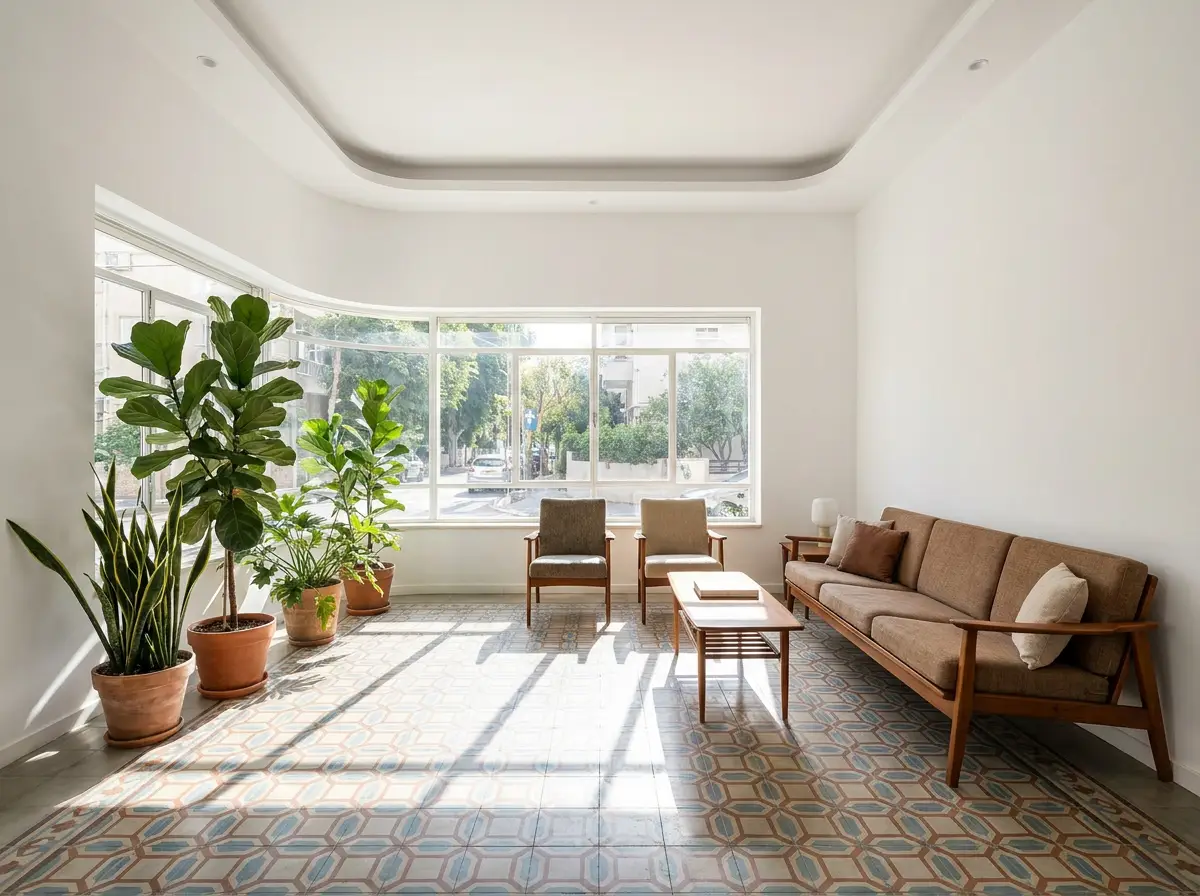
“Dream houses” were going up here as early as 1924, but most homes were built in the 1930s and 1940s, in the International Style and the Eclectic style, and part of the area is recognised by UNESCO as a World Heritage Site. The typical house was built with three storeys, and many have had a rooftop floor added over the years. On some streets the façade meets the pavement, with no fence and no garden.
In practice: a rooftop apartment is often a later addition, and in an older building it's worth asking about the floor and the elevator before you fall for the photos. A ground-floor apartment on a street like that opens almost straight onto the pavement. And buildings vary: restored and renovated houses stand next to neglected ones, and many also have offices and businesses in them.
Safe rooms in an older building: what you get instead
During the 1948 War of Independence, almost no house here had a shelter. In a few buildings you can still see the protective wall from that time: a brick wall in front of the stairwell entrance that shielded it from snipers' bullets fired from Jaffa.
The buildings are being renewed, slowly: TA/4320, the plan the municipality is advancing in place of the national TAMA 38 scheme, encourages strengthening buildings and allows safe rooms to be added. In a building without one, the options are an internal stairwell, the building's shelter or a public shelter nearby. The host should know which is closest; ask, and walk there once before you ever need to.
Two stations, plenty of buses and a bike lane
The Red Line runs under two edges of the neighbourhood: Allenby station is by the junction of Allenby and Yehuda HaLevi, and Carlebach station, which will also serve the future Green Line, sits under the junction of Carlebach and Begin Road, also known as Maariv junction. From either one you can ride south to Bat Yam or east to Petah Tikva.
On Shabbat the line stands still: on Friday the last train leaves in the afternoon, and service only resumes on Saturday night. On weekdays there are plenty of buses: Rothschild Boulevard, which has a bus lane, took over most of Allenby's lines after Allenby was closed to traffic for the Purple Line works. And for cyclists, a wide bike lane runs down the middle of the boulevard, one of the busiest in the country.
Noise and parking: the price of the location
Lev HaIr isn't quiet: King George is a busy shopping street, Sheinkin became a street of boutiques and cafés back in the 1970s and 1980s, and since its renovation Rothschild has become one of the city's leading places to go out, which also pushed up property prices along the boulevard. In the morning and afternoon it is jammed with traffic, too. Light sleeper? Look for a window onto the yard.
Now the car. A resident zone permit lets you park free in the blue-and-white bays in your residential zone, but it goes only to people whose city address is registered with the Interior Ministry and who are on the arnona (municipal tax) roll as the occupier. If the arnona is in the host's name, you won't get one, and where a sign reserves parking for permit holders from 17:00 to 08:00, there's no space for you there at those hours.
So who is it worth it for? People who want to live in the city rather than commute into it: popping over to the Carmel Market via Magen David Square, running errands at Dizengoff Center, Israel's first mall, and walking home from a concert at Heichal HaTarbut. If you need a safe room in the apartment, quiet nights or easy parking, expect a much longer search.
Sublets in City Centre, Tel Aviv: frequently asked questions
The description says “Lev HaIr”. Where exactly is that?
It depends on the definition, so ask for the address. On Wikipedia it's the neighbourhood between King George, Ben Zion, Begin Road, Allenby and Rothschild; in the municipality's plan it's quarters 5 and 6, from Bograshov to Yitzhak Elhanan and from HaYarkon to Begin Road.
What are the odds of finding an apartment with a safe room in Lev HaIr?
Not high. Most buildings went up in the 1930s and 1940s, and almost none of them even had a shelter. A safe room can be added to an older building when it is strengthened and renewed. If it's a must, mention it in your very first message to the host.
Does the light rail run on Shabbat?
No. On Friday the last train leaves in the afternoon, and the line starts running again on Saturday night. Exact times shift with the start and end of Shabbat, and Dankal publishes them on its website.
Can I park on the street without a resident permit?
Yes, if you pay, but not at all hours: where a sign reserves parking for permit holders, there's no space for you there between 17:00 and 08:00. And you won't get a permit if the arnona is registered in the host's name, so it's worth checking whether the apartment comes with a parking space.
When and whom do I pay, and where does the landlord come in?
The host receives the rent and the deposit in person, at the key handover, and renters pay Home Sublet no fees at all. A sublet is only possible when the landlord agrees, so make sure the host has that consent before you commit.
Sources
More guides
- How to find a sublet in Tel Aviv or Jerusalem
- Subletting in Israel: what it is and what the law says
- How much a sublet costs in Tel Aviv and Jerusalem
- Student sublets near Tel Aviv University and the Hebrew University
- Sublet with a mamad: how to check the safe room before you book
- Sublet agreement: a free template, plus the landlord’s consent letter